Deviled eggs are simple to make, but the boiling step can make or break them. Cook the eggs too little and the yolks may be soft or difficult to mash. Cook them too long and the whites can turn rubbery, while the yolks may develop a greenish ring. For eggs that are firm, easy to fill, and ready to serve, use a gentle covered-pan method and cool them promptly.
For large eggs, bring them to a boil in a covered pan, turn off the heat, and let them stand for 15 minutes. Then cool them in cold water or an ice bath before peeling. This timing follows USDA guidance for hard-cooking large eggs. USDA FSIS hard-cooked egg instructions
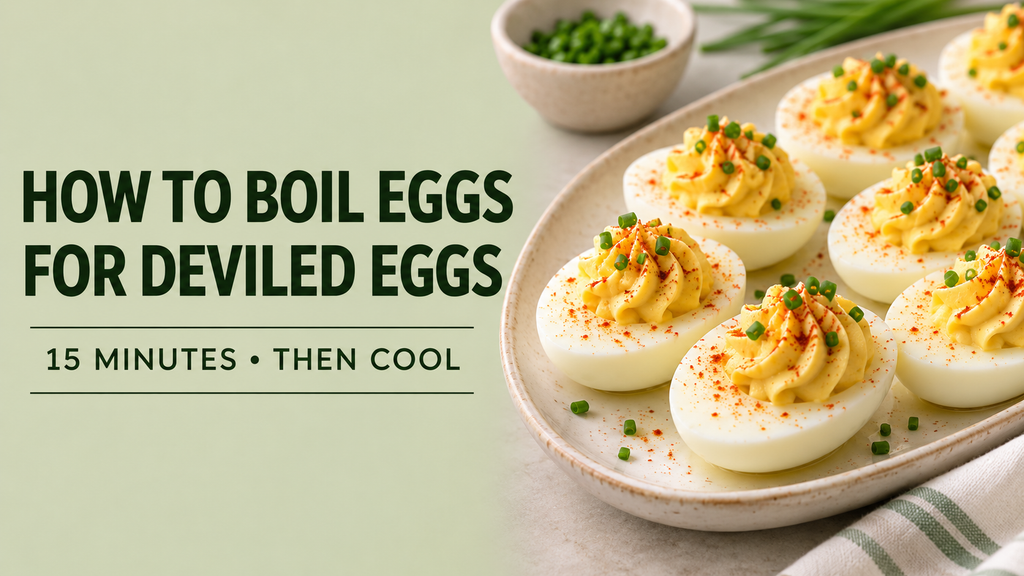
Table of Contents
The simple method
You’ll need:
- Large eggs
- A saucepan with a lid
- Cold tap water
- A bowl of ice water, or cold running water
1. Arrange the eggs in the pan
Set the eggs in a single layer in the saucepan. Avoid stacking them, which can make them more likely to knock against each other and crack.
2. Cover them with cold water
Add enough cold water to cover the eggs by about 1 inch. Starting with cold water helps the eggs heat gradually as the pan warms.
3. Bring the water to a boil
Cover the pan and bring the water quickly to a boil over medium-high heat. Keep an eye on it so the water does not boil over.
4. Turn off the heat and let the eggs stand
As soon as the water reaches a boil, turn off the heat and leave the lid on. Let large eggs stand in the hot water for 15 minutes. USDA’s guide gives 12 minutes for medium eggs and 18 minutes for extra-large eggs. USDA FSIS
5. Cool the eggs promptly
Move the eggs to a bowl of ice water, or run cold water over them until they are cool. Cooling stops the cooking and makes the eggs easier to handle. Let them cool before peeling and cutting them.
Why this method works well for deviled eggs
Deviled eggs need whites that hold their shape and yolks that mash smoothly. The covered-pan method cooks the eggs without keeping them at a hard boil the whole time. That gives you a reliable starting point for making neat halves and a creamy filling.
The cold-water step matters, too. Eggs keep cooking from their own heat after they leave the pan. Cooling them quickly helps prevent that carryover cooking and lets you get on with peeling and filling.
How to peel the eggs without tearing the whites
Start with fully cooled eggs. Tap one gently on the counter until the shell is cracked all over, then roll it lightly under your palm to loosen the shell. Begin peeling at the wider end, where there is often a little air space. Peeling under a thin stream of water can help loosen small shell fragments.
Very fresh eggs can be harder to peel cleanly. USDA notes that eggs that have been refrigerated for several weeks are often easier to hard-cook and peel than extremely fresh eggs. USDA FSIS
If a white gets a small tear, save that egg for the filling or a snack. You can still make a good-looking platter with the intact halves.
How to turn boiled eggs into deviled eggs
Once the eggs are cool and peeled, slice each one lengthwise. Carefully remove the yolks and place them in a bowl. Mash the yolks with mayonnaise, a little mustard, salt, and pepper until smooth. Add the mayonnaise gradually so the filling stays thick enough to pipe or spoon into the whites.
For a classic flavour, finish with a light sprinkle of paprika. For a fresher taste, try chopped chives or a small amount of relish. Keep additions modest at first; you can always add more after tasting.
Spoon the filling into the egg whites for a relaxed, homemade look. For a tidier party platter, transfer it to a piping bag or a small resealable bag with one corner snipped off.
Make-ahead tips
You can hard-cook the eggs ahead of time and keep them in the refrigerator in their shells. The FDA says hard-cooked eggs, peeled or unpeeled, should be used within one week when properly refrigerated. FDA egg-safety guidance
For the neatest halves, peel and fill the eggs closer to serving time. If you prepare the filling in advance, cover it and refrigerate it. Keep the finished deviled eggs chilled until you’re ready to serve.
Do not leave cooked eggs or egg dishes at room temperature for more than two hours, or more than one hour when the temperature is above 90°F (32°C). Refrigerate leftovers promptly. The FDA advises using leftover cooked egg dishes within three to four days. FDA
Common questions
How long should I boil large eggs for deviled eggs?
For large eggs, bring the covered pan to a boil, turn off the heat, and leave the eggs covered in the hot water for 15 minutes. Cool them promptly afterward. USDA FSIS
Should I keep the water boiling for 15 minutes?
No. In this method, bring the water to a boil, turn off the heat, and let the eggs stand in the covered pan. A continuous boil is not needed.
Why is there a green ring around the yolk?
A greenish ring can appear when eggs are cooked for too long or at too high a temperature. The covered-pan method and prompt cooling help limit overcooking. The ring may not look appealing, but its colour alone does not mean the egg is spoiled.
Why are my eggs difficult to peel?
Extremely fresh eggs can be harder to peel. Cool the cooked eggs fully, crack the shell all over, and begin peeling at the wider end. Peeling under water may help. USDA notes that eggs stored in the refrigerator for several weeks can be easier to peel after hard-cooking. USDA FSIS
Can I boil the eggs the day before?
Yes. Refrigerate the hard-cooked eggs and use them within one week. For food safety, keep them chilled and do not leave them out for more than two hours. FDA
The easy routine to remember
For classic deviled eggs, place large eggs in a single layer, cover them with cold water, and bring the pan to a boil. Turn off the heat, let the eggs stand covered for 15 minutes, then cool them promptly in cold water or an ice bath. Peel, halve, mash the yolks with your chosen filling ingredients, and spoon or pipe the mixture back into the whites.
How to Boil Eggs for Deviled Eggs
A little planning makes the job easier: cook the eggs ahead, keep them refrigerated, and fill them closer to serving. That gives you firm whites, smooth yolks, and a platter that’s ready when guests arrive.
SEO title: How to Boil Eggs for Deviled Eggs: Easy Timing and Peeling Tips
Meta description: Learn how to boil large eggs for deviled eggs using a simple covered-pan method. Get the timing, cooling and peeling tips, and safe storage guidance.
Suggested URL slug: how-to-boil-eggs-for-deviled-eggs
I’ve written this in original language and based the cooking and storage guidance on official food-safety sources. No article can guarantee a number-one Google ranking.